30 Apr, 2026
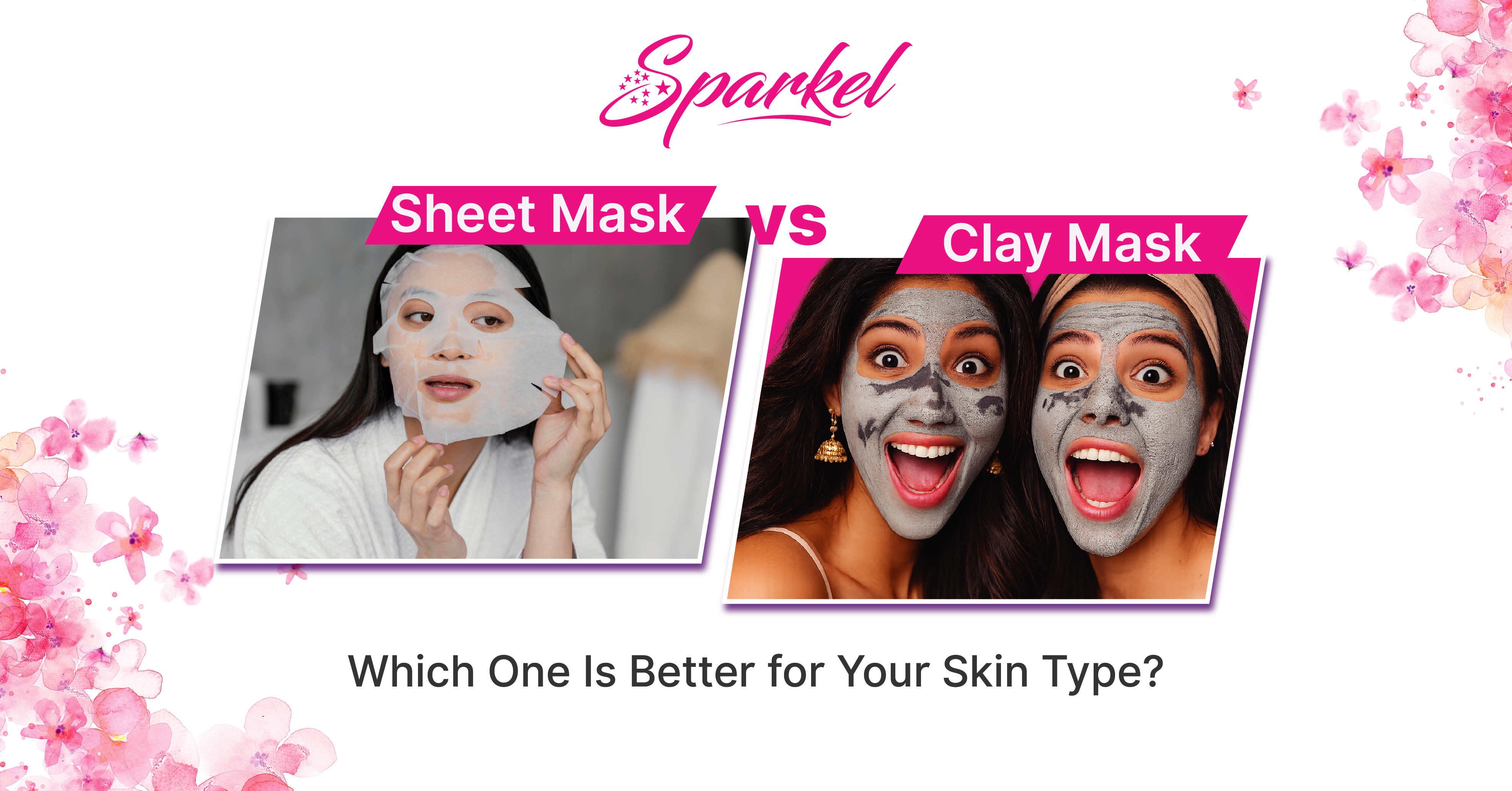
Face masks are a popular part of modern skincare routines. From hydration to oil control, different types of masks offer different benefits depending on your skin’s needs. Two of the most widely used options are sheet masks and clay masks.
Understanding the difference between a sheet mask vs clay mask can help you choose the right option for your skin type. While both masks offer useful skincare benefits, they work in different ways and serve different purposes.
Some masks focus on hydration, while others aim to remove excess oil or impurities. Knowing when to use each type can help you build a more balanced skincare routine masks approach.
Both masks support skin health, but they function differently.
A sheet mask is a thin fabric sheet soaked in a serum containing nourishing ingredients. It sits directly on the skin and allows the ingredients to absorb gradually.
Common sheet mask benefits include:
Because sheet masks focus on hydration, they are often preferred by people looking for a hydrating vs detox mask solution that restores moisture to the skin.
\
A clay mask is a type of face mask made with natural clays such as kaolin or bentonite, which are known for their oil-absorbing properties. These masks are applied as a paste and left on the skin until they partially dry, helping draw out impurities from the pores.
Key clay mask benefits include:
Because of their oil-absorbing properties, clay masks are often considered a best face mask for oily skin.
Choosing between sheet masks and clay masks often depends on your skin type and concerns.
People with dry or dehydrated skin usually benefit more from hydrating products. In a hydrating vs detox mask comparison, hydrating sheet masks typically provide better moisture support than clay masks.
Hydrating sheet masks containing ingredients like aloe vera and glycerine help restore moisture and improve skin comfort.
Many people use options such as the Sparkel Hydrating Facial Sheet Mask, which contains aloe vera, olive leaf, and glycerine to help moisturise and refresh the skin.
Individuals with oily skin may benefit from clay masks because they absorb excess oil from the skin’s surface.
However, oily skin still needs hydration. In some cases, alternating between a clay masks and sheet mask can help maintain balance.
Combination skin can be more challenging because different areas of the face may have different needs.
For example:
This is why many people with mask for combination skin concerns alternate between clay masks and sheet masks to maintain balance.
When selecting a face mask, ingredients play an important role in determining how the mask supports the skin.
Aloe vera is widely recognised for its soothing and moisturising properties. It helps calm the skin while delivering lightweight hydration.
Because of its calming effect, aloe vera is often used in products designed to improve sheet mask benefits such as skin comfort and hydration.
Glycerine is a humectant that attracts moisture and helps retain hydration in the skin. This ingredient contributes to smoother and softer skin texture.
When included in a hydrating vs detox mask routine, glycerine helps maintain moisture balance after cleansing treatments.
Vitamin C helps improve skin brightness and supports a more even complexion. It is commonly included in sheet masks designed to restore radiance.
The Sparkel Anti-Oxidant Facial Sheet Mask includes vitamin C and glutathione, ingredients that help support brighter-looking skin.
Yes, both masks can be included in a balanced skincare routine masks approach.
Many skincare routines alternate between hydration-focused masks and detoxifying masks depending on the skin’s condition.
For example:
This combination approach can help maintain both cleanliness and moisture balance.
What is the main difference between sheet masks and clay masks?
The main difference is that sheet masks provide hydration, while clay masks focus on oil absorption and deep cleansing.
Which mask is better for oily skin?
Clay masks are often considered the best face mask for oily skin because they absorb excess oil and help cleanse pores.
Are sheet masks suitable for combination skin?
Yes. People with mask for combination skin concerns often use sheet masks to hydrate dry areas while using clay masks for oily zones.
Can I use sheet masks every day?
Most sheet masks can be used a few times per week depending on your skincare routine.
Both sheet masks and clay masks have unique benefits depending on the needs of your skin. While clay masks focus on oil control and cleansing, sheet masks help restore moisture and comfort.
Understanding the difference between sheet mask vs clay mask can help you choose the most suitable option for your skin type. When used correctly within a balanced skincare routine, both types of masks can contribute to healthier-looking skin.
25 Apr, 2026
20 Apr, 2026
15 Apr, 2026
26 Mar, 2026
22 Mar, 2026
Sign up for exclusive insights, special offers, and all things Sparkel!