05 Feb, 2026
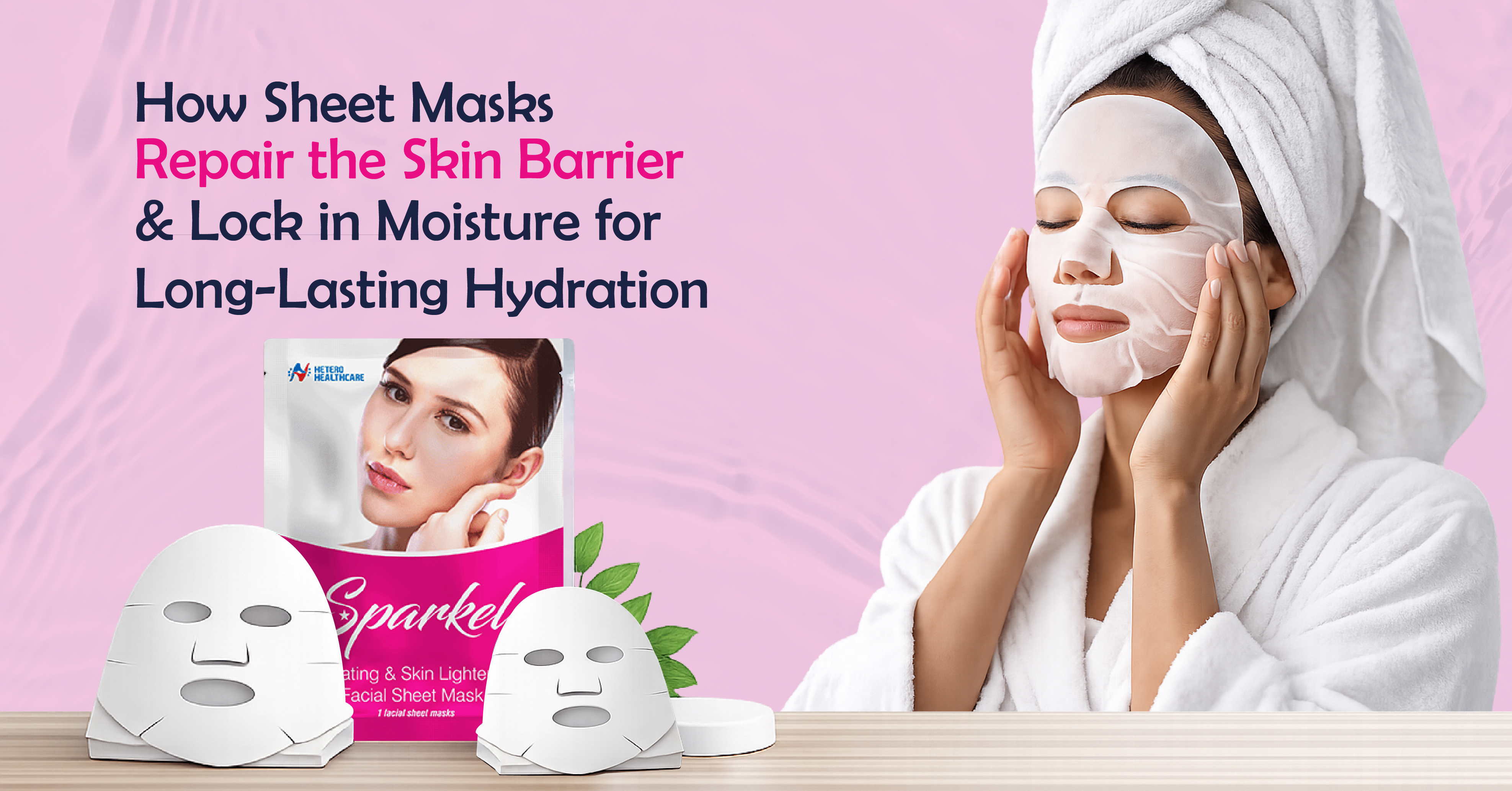
Sheet masks help repair the skin barrier by delivering hydrating and soothing ingredients directly to the skin while reducing moisture loss. Ingredients like aloe vera, glycerine, hyaluronic acid and antioxidants support barrier recovery, calm dryness, and lock in moisture, making sheet masks effective for dry, sensitive, and damaged skin.
Your skin barrier is the outermost layer of your skin. Its role is simple but critical - to keep moisture in and irritants out. When this barrier is healthy, skin feels smooth, hydrated, and resilient.
However, factors common in Indian lifestyles can weaken it, such as:
When the barrier is damaged, skin becomes dry, tight, sensitive, and prone to dullness.
This is where a hydrating face mask plays a supportive role.
Sheet masks work differently from traditional face masks. Instead of drying on the skin, they sit directly on the surface, creating a light occlusive layer that reduces transepidermal water loss (TEWL).
The sheet material traps moisture and allows the ingredients to absorb gradually into the skin. This makes sheet masks particularly effective at locking in hydration, especially when the skin barrier is compromised.
Because sheet masks are serum-based, they avoid harsh clays or alcohols that can worsen dryness. This makes them suitable as a face mask for dry and sensitive skin.
Ingredient choice is essential when using a sheet mask for dry skin or damaged skin barrier. Below are the ingredient types commonly used across sheet masks and why they matter.
Aloe vera is widely recognised for its calming and moisturising properties.
How it helps:For people exposed to sun, heat, or pollution, aloe vera helps calm the skin while improving moisture comfort.
Glycerine is a humectant, meaning it draws water into the skin and helps hold it there.
Hydrating sheet mask benefits of glycerine:It plays a crucial role in making a sheet mask effective as a deep hydration face mask.
Hyaluronic Acid - Hydration Without HeavinessHyaluronic acid helps bind water to the skin's surface layers, improving hydration levels quickly.
Why it's barrier-supportive:This makes it ideal in a sheet mask for dry skin or dull, tired skin.
Environmental stress weakens the skin barrier over time. Olive leaf extract provides antioxidant support that helps protect against daily exposure to pollution.
Benefits include:Antioxidants are especially important in urban Indian environments.
Brightening ingredients also play a role in barrier recovery when used in balanced formulations.
Their role:When combined with hydrating ingredients, they enhance glow without compromising sensitive skin.
If your skin feels dry, sensitive, or over-processed, follow this gentle approach.
Use this routine 2-3 times per week for best results.
A face mask for damaged skin barrier is suitable if you experience:
Sheet masks are gentle enough for both men and women and work well across skin types when ingredients are chosen correctly.
Avoid these habits:
Barrier repair requires consistency and gentle care.
Indian skin is often exposed to multiple stressors at once - sun, pollution, humidity, and lifestyle factors. Sheet masks offer:
This makes them one of the most effective tools for long-lasting hydration.
Sheet masks support barrier repair by improving hydration and reducing moisture loss when used consistently.
How often should I use a hydrating sheet mask?2-3 times a week is ideal for dry or sensitive skin.
Are sheet masks suitable for sensitive skin?Yes, especially when they contain soothing and hydrating ingredients like aloe vera and glycerine.
Should I wash my face after using a sheet mask?No. Massage the remaining serum into the skin and follow with moisturiser.
Can men use sheet masks for dry skin?Absolutely. Sheet masks are unisex and effective for all skin types.
30 Apr, 2026
25 Apr, 2026
20 Apr, 2026
15 Apr, 2026
26 Mar, 2026
Sign up for exclusive insights, special offers, and all things Sparkel!